Student Profiles
PRIME-TIDE Student Profiles
PRIME-TIDE students come from a variety of backgrounds and tribal communities. Learn more about their unique lived experiences and motivations by reading their stories below.
PRIME-TIDE students come from a variety of backgrounds and tribal communities. Learn more about their unique lived experiences and motivations by reading their stories below.

Pronouns: she/her
Hometown: Vancouver, WA
"Chokma! Chickasha saya. Hello! I am Chickasaw. My reason for pursuing medicine begins with my extremely supportive community who taught me to use my strengths in service of others, have empathy for everyone around me, and to continuously develop my growth mindset. My love of science began my interest in medicine, but my values are what aligned me with this career path.
After graduating in 2024, I applied for a six-week internship to shadow doctors on my tribe’s reservation in Oklahoma. I was able to observe doctor-patient interactions that showed me how some doctors use their roles to go above and beyond to help their patients and their communities. One doctor was also Chickasaw and had spent her career caring compassionately for patients and advocating for a better tribal health care system. Her advocacy led to dramatic changes in the health care provided at our medical center, and our community is now much healthier. Seeing how she used her strength in service of our community inspired me to also become more involved in tribal medicine.
When I found PRIME-TIDE, I knew that this program would help me achieve my goals to use my love of science to support my communities. PRIME-TIDE will allow me to work more in tribal communities, and this program will focus on compassionate care of individuals and addressing health inequities inspires me every day to become the best physician I can be."

Pronouns: he/him
Hometown: San Diego, CA
"ᎣᏏᏲ ᏂᎦᏓ - Osiyo nigada - Hello everyone! I’m a citizen of the Cherokee Nation and grew up in San Diego, California. My journey to medicine has been shaped by a passion for understanding and supporting the people and communities around me. At UC San Diego, I earned my BS in human biology before pursuing a Master of Public Health in epidemiology. Along the way, my involvement with the California Native American Research Centers for Health introduced me to a community of Native students, researchers and mentors who helped me better understand the role I could play in Native health. Experiences with the Four Directions Summer Research Program and, later, tribal health research through the California American Indian Tobacco Initiative Evaluation further strengthened my interest in combining clinical medicine with public health.
PRIME-TIDE represents an opportunity to continue developing this work as I begin my medical education. I hope to build upon the perspective I have gained through research and community engagement while learning how to translate it into meaningful patient care. I am particularly interested in improving health in Native communities through culturally informed medicine, prevention and advocacy. The mentorship and community-centered experiences within PRIME-TIDE will help me grow into a physician who understands that caring for patients extends beyond the clinic and includes the health of the communities they come from. Overall, I hope to use my medical and public health training to contribute to healthier communities and help support opportunities for those who come after me.”

Pronouns: she/her/hers
Hometown: Roseville, CA
"I chose PRIME-TIDE because its commitment to underserved communities aligns with my mission. Through PRIME-TIDE, I hope to develop the leadership and advocacy skills necessary to address health care inequities and become a physician leader who creates lasting change while inspiring future generations to see themselves in medicine.
I was raised in a culturally diverse household that celebrated both my Puerto Rican and Native American heritage. As a descendant of the Karuk Tribe of Northern California, I grew up witnessing both the resilience of my community and the disparities that can exist within health care. My personal experiences seeking care through Indian Health Services exposed me directly to the effects of limited resources, delayed care, and barriers faced by underserved communities. These experiences shaped my desire to become not only a physician, but also an advocate for meaningful change.
I also chose medicine because, growing up, I never saw physicians who shared my background. Becoming a doctor was not an opportunity I recognized as possible for someone like me because I lacked those examples. I want to change that for the next generation by becoming a visible role model for Native and other underrepresented students and showing them that a career in medicine is within their reach."

Pronouns: he/him/his
Hometown: South Sacramento, CA
"I grew up in a large, blended Mexican American household in South Sacramento and Elk Grove, where food insecurity, financial instability, and limited access to routine health care were normal parts of life. I did not recognize these experiences as disparities growing up, but they eventually shaped how I understand the relationship between a person's circumstances, their trust in health care, their ability to access care and how each part intersects to affect their health outcomes.
My path to medicine was not linear as I found medicine later in life after working as an emergency department technician. Nearly a decade working alongside patients and families during some of their most vulnerable moments continually reinforced my desire to become a physician. These experiences taught me the importance of listening without assumption, and communicating in ways patients understand. They also showed me how much a person's social, emotional, and cultural contexts can shape their experience with health care.
As I begin medical school, I hope to explore the many ways I can serve patients while developing into a physician who builds trust, advocates for accessible and equitable care, and contributes beyond individual patient encounters through leadership, mentorship, and education. I chose PRIME-TIDE because I want to learn from and alongside American Indian and Alaska Native communities while better understanding the structural, cultural, and geographic factors that shape health and the lived experiences of marginalized and underserved populations. Through PRIME-TIDE, I hope to develop the skills needed to provide culturally responsive, trust-based care and to grow into a physician leader who can help improve care for the communities I serve."

Pronouns: he/they
Hometown: Hesperia, CA
"I grew up in Hesperia, California, a semi-rural and medically underserved community in the High Desert, and come from a family of immigrants that fled a civil war and poverty in El Salvador. Witnessing my family endure medical neglect and even experiencing it many times myself, I began to aspire toward becoming a healthcare provider. I went on to earn a bachelor of science degree in Human Biology and Society (with a minor in Chicanx/a/o Studies) at UCLA, where I explored the intersection of biology, disease, and the racial and social determinants of health. Much of what I learned helped me to contextualize my experiences in spaces of healthcare as well as to understand why so many communities of color can be mistrusting of medicine.
As an undergraduate, I built a health curriculum and assisted providers in delivering direct care through translation support in rural Mexico as the Health Education Coordinator for Flying Samaritans. After graduating, I spent a year in Tijuana, Mexico, as full-time clinic coordinator at a free clinic serving refugee communities with Refugee Health Alliance, then worked as a research assistant supervised by two UCLA Emergency Medicine physicians for a project called Decarcerating Care Spaces. In this project, we partnered with underserved LA communities to reimagine safety in healthcare beyond policing and federal immigration agency involvement. Finally, I had the great honor of caring for my grandparents for four years, who I love dearly, before starting medical school.
I chose PRIME-TIDE because I understand deeply that Native and Latinx communities face interconnected forms of oppression and health inequity. I humbly seek to serve and learn from local tribal communities and aim to become a physician who wields medicine as a tool for advocacy, equity, dignity, and transformation, while cultivating solidarity across communities to build collective power and address the inequities that shape our health."

Pronouns: he/him
Hometown: Leicester, MA
"I am a member of the Chaubunagungamaug Band of Nipmucks, and my desire to pursue medicine stems from a commitment to serving Native American communities. Growing up in a Native community, I witnessed firsthand the health disparities affecting my family and other tribal members. These experiences sparked my interest in medicine at an early age and continued to shape my goals throughout my education and career. My experiences as an EMT in my hometown of Leicester, Massachusetts, learning about intergenerational trauma through the Association on American Indian Affairs, and participating in the Native American Research Internship at the University of Utah have deepened my understanding of the unique health care needs of Native American communities and other underserved populations. I chose PRIME-TIDE because I knew I wanted to center my medical education and future career around Native American health. PRIME-TIDE offered a unique opportunity to develop the knowledge, skills, and relationships needed to become a physician who can effectively serve Native communities. I am especially excited to learn alongside a cohort of students who share my commitment to Native American health and bring their own experiences and perspectives to medicine. Being part of PRIME-TIDE is also my way of giving back to the community that has supported me throughout my journey. I am grateful for this opportunity and eager to learn from others in my cohort, involve myself in local Native communities, and grow into the physician I hope to become."

Pronouns: she/her
Hometown: Savannah, GA
"Halito! I chose to join UC San Diego PRIME-TIDE because of my deep-rooted desire to address broader community health issues — especially those impacting Native and rural communities — with compassionate and structurally informed care.
As I reflect on my family’s history, I have come to understand how socioeconomic hardship can separate Native families from their communities and weaken their connection to their heritage. For my family, factors such as poverty, job scarcity, and limited health care accessibility made it difficult to remain on the reservation. As a result, I grew up knowing of my Choctaw identity but disconnected from many of its traditions, stories, and community ties. I’ve come to understand this as part of a broader pattern in which health care inequities, socioeconomic hardship, and intergenerational trauma disrupt both family cohesion and cultural preservation in Native communities.
My experiences as a medical assistant in rural North Carolina, bordering the Qualla Boundary of the Eastern Band of Cherokee Indians, further shaped my understanding of these inequities and strengthened this commitment. Through my work, the most meaningful lessons came from witnessing the barriers patients faced long before entering the exam room—highlighting how difficult it can be for rural families to access consistent care, especially when compounded by the historical marginalization, geographic isolation, and under-resourced health care systems that Native communities have faced. I learned that meaningful improvements in care must be grounded in the lived experiences of patients rather than assumptions made outside the community.
PRIME-TIDE will provide the mentorship, interdisciplinary training, and community engagement needed to become a physician who listens closely, leads with humility, and works alongside communities to create lasting change. I am excited to strengthen my ability to assess community health needs, evaluate disparities, and design sustainable interventions that improve health care access in and advocate for healthier futures in rural and Native communities."

"Aloha kākou! My reason for pursuing medicine is grounded in my desire to serve the Native Hawaiian and Pacific Islander (NHPI) community in Hawaiʻi, on the continent, and across moananuiākea. Observing the health disparities in my own family’s story is what led me to consider medicine in the first place. Studying the History of Medicine and Public Health, along with seeing Kānaka ʻŌiwi physicians make a meaningful impact on the families they care for, further solidified my decision to pursue medicine.
I chose PRIME-TIDE at UC San Diego because it will equip me with the skills, experience, and knowledge required to best promote health and healing in NHPI and other Native communities. Furthermore, I am especially excited to learn alongside a cohort of scholars who have similar visions for how they want to make a difference in their communities and the broader world of medicine. Through PRIME-TIDE, I am eager to explore the various interdisciplinary, holistic, and culturally appropriate approaches to health care of indigenous communities while also building relationships with peers, mentors, and NHPI and AI/AN community leaders. Ultimately, I believe participating in PRIME-TIDE will help me become the effective physician and leader I hope to be."

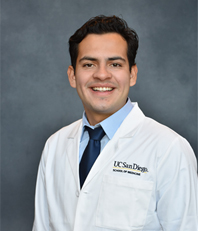
Pronouns: he/him
Hometown: Los Angeles
My decision to join UC San Diego PRIME-TIDE stems from a deep-rooted commitment to addressing health disparities, particularly in indigenous and immigrant communities. As the son of Guatemalan immigrants, I grew up witnessing the health care challenges faced by underserved populations in Los Angeles. This early exposure ignited my passion for medicine and health equity.
My experiences at free clinics in the Bay Area as a Spanish medical translator further illuminated the critical need for culturally competent care. Post-graduation, my work with the Mayan population in Oakland deepened my understanding of the unique health care challenges faced by immigrant and indigenous communities. It also revealed to me the democratizing potential of technology in health care.
UC San Diego PRIME-TIDE offers an opportunity to pursue my passion for using technology to address the needs of indigenous communities. I'm excited about integrating my medical education with a master's degree in data science, public policy, or public health, equipping me with additional tools to effectively advocate for and serve these communities.
Overall, with my time in PRIME TIDE, I'm eager to enhance my cultural competence and engage with diverse indigenous groups, gaining insight into both their unique challenges and shared issues. Through collaboration with the PRIME program and my peers, I aim to contribute meaningfully to improving health outcomes for indigenous communities and bridging existing health care gaps.
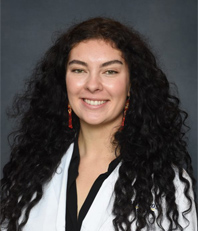
Hometown: Kennewick, WA
Undergraduate School: University of Washington
"Being Cherokee has shaped not only the way I conceptualize health, but also how I view my role as a future health professional. I revere my responsibility to provide care, education, and advocacy for the community that has aided my development as an Indigenous scholar. Throughout my life, I've enjoyed being involved in intertribal communities and programs dedicated to their advancement such as First Nations at University of Washington, University of Utah's Native American Research Internship, and the Summer Health Professions Education Program. I care deeply about my people and their health, and when it is my turn to serve them as a physician, I want to be able to provide the exceptional care they deserve. PRIME-TIDE is providing me with the tools and experience to contribute to health and healing in Native communities."
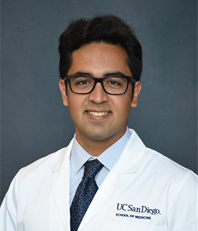
Pronouns: he/him/his
City affiliation: Los Angeles, CA
I decided to join UC San Diego PRIME-TIDE because it strongly aligns with my commitment to serving American Indian/Alaska Native (AI/AN) and other underrepresented communities facing significant health disparities. My work at United American Indian Involvement, a non-profit community-based organization providing health and human services to AI/AN communities in Southern California, deepened my understanding of the complex health challenges faced by Native populations, particularly the COVID-19 pandemic and the compounded effects of climate change on health. Having experienced challenges with medical mistrust and barriers to care in my own family, I became passionate about working to mitigate the impact of these barriers in AI/AN communities, where they play prominent roles in worsening health outcomes. I recognized that PRIME-TIDE offers a unique opportunity to build upon my experience by providing me with the resources and training I would need to practice culturally sensitive, trust-based care, which I have seen be crucial in improving health outcomes for AI/AN and other underserved patients.
Through PRIME-TIDE, I am also eager to enhance my cultural competency and skills in providing inclusive, longitudinal care during clinical rotations at IHS health care sites. The program's emphasis on research and community engagement also contributes to my aspiration to grow into a skilled and culturally sensitive physician and an advocate for my patients and their communities. I am confident that the training, mentorship, and experiences I will gain through PRIME-TIDE will equip me with the tools necessary to become a compassionate physician who makes a lasting impact in AI/AN communities.
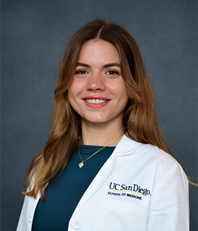
Pronouns: she/hers
Hometown: Pasadena, CA
My decision to join the UC San Diego PRIME-TIDE program is rooted in my heritage and experiences with Native communities. While volunteering with the Kumeyaay people on the La Posta Reservation, I witnessed the lack of access and the structural barriers they faced while seeking medical treatment. The limited number of medical facilities close to reservations, as well as the absence of comprehensive health education causes disproportionate representation of Native people experiencing common illnesses. One of my passions is increasing access to such knowledge within the community to lower the risk of preventable diseases caused by barriers to health care and unhealthy habits.
Another significant reason I have a passion for the PRIME-TIDE program is my ties to Native people from both grandparents on my father’s side. My story follows the common thread of older generations being forced to assimilate and losing touch with the heritage that was once so integral to their livelihoods. My Chickasaw citizenship and grandmother’s childhood in Ada, Oklahoma was something I took for granted until I learned the importance of community and the ways that I can give back. I believe this program will offer me the opportunity to be a force for change within Native communities while also making me a more culturally competent physician for years to come.
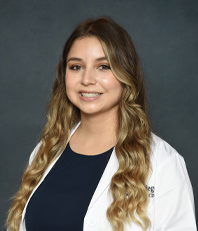
Hometown: Albuquerque, NM
Undergraduate School: Occidental College
University: Stanford University
Concentration: Business Administration
"I chose PRIME-TIDE because I am passionate about the program's mission to promote health equity in American Indian/Alaska Native (AI/AN) communities. As a Latinx and Native American student from New Mexico, I personally saw how socioeconomic, cultural, and geographic barriers limit health care access for Native populations. Given a one-month prognosis at fourteen years old, I experienced firsthand the consequences of these healthcare barriers, as the costs and availability of medical resources determined my lifespan. When I unexpectedly recovered within a year, I became determined to increase access and affordability of health care in underserved communities like my own. Prior to joining PRIME-TIDE at UC San Diego, I worked at an international consulting firm where I learned to integrate medicine, business, and technology to improve health care access on the patient and systemic levels. The PRIME-TIDE program understands the value of interdisciplinary collaboration by providing a dual degree education focused on cultural humility and community partnerships to address the public health challenges confronting Native communities. With a network of renowned mentors, community leaders, and like-minded peers, I am excited to empower AI/AN patients and combat systemic inequities."
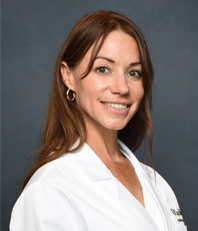
Hometown: Santa Rosa, CA
Undergraduate School: University of California, Berkeley
"The mission of UC San Diego School of Medicine's PRIME-TIDE program is closely aligned with my reason for becoming a physician: I hope to be of service to American Indian communities and other populations who have historically been left behind when it comes to health care and other essential resources. I am a nontraditional medical student and career-changer. My life experience has shown me that societal problems don’t exist in a vacuum. Improving the health of our most vulnerable communities is necessary to bring about the overall healing our society needs, and the PRIME-TIDE program is training me to be a physician who will contribute meaningfully to this goal.
Because my grandmother was forced to give up her tribal identity and assimilate into the greater American culture, my relatives and I didn’t get to experience a connection to our Native American culture and heritage. PRIME-TIDE also provides a unique and powerful way for me to rebuild a connection with my tribe and other native communities, and to help improve the health of these communities in new and concrete ways."
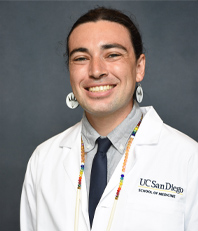
Hometown: Santa Paula, CA
Undergraduate School: Dartmouth University
"ᎣᏏᏲ ᏂᎦᏓ. I am a citizen of the Cherokee Nation of Oklahoma. I grew up in Santa Paula, California and attended Dartmouth College where I majored in both Environmental and Native American Studies. Before medical school, I worked as a medical assistant and public health associate at the Seattle Indian Health Board in Seattle, WA. While at UC San Diego, I hope to continue growing my interests in integrating Traditional Indian Medicine in clinical practice and primary care. When not studying, you can find me running, beading, or sewing. Following PRIME-TIDE I hope to go back to serving Native communities though working at another IHS, tribal or urban clinic."
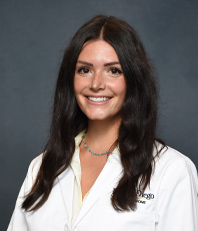
Hometown: Bloomington, IL
Undergraduate School: Southern Illinois University - Carbondale
"I chose the PRIME-TIDE program because as a citizen of Chickasaw Nation and a future health care professional, I want to address inequities in our health care system, especially for Native American communities. My prior experiences in diversity and inclusion programs in undergrad, community service with at-risk populations in a metropolitan area, and intertribal programs like the Native American Research Internship at the University of Utah have all given me a greater understanding of what underserved communities need from their health care providers. I am excited to be a member of PRIME-TIDE because participating in this program will not only provide me and my cohort invaluable public health knowledge and training, but will also help prepare us to provide proper care for our Indigenous patients. With the help of PRIME-TIDE, I am looking forward to a lifetime of advocacy and contributing to the betterment of our Native American communities."
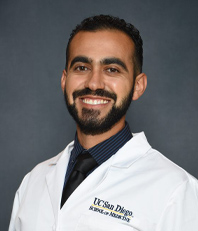
Hometown: Chula Vista, CA
Undergraduate School: University of California, San Diego
"I chose PRIME at UC San Diego because I wish to empower underserved communities and contribute to the lessening of health disparities. My experience volunteering has allowed me not only to give back to my own community but also to become better acquainted with other communities. I believe that by uniting people from different backgrounds and different perspectives, we can foster allyship and leadership to bring equitable and affordable health care to all. My experience volunteering at the UC San Diego free clinic, Palomar Hospital, and the migrant shelter in downtown as well as my perspective coming from a bilingual household and watching my mother navigate the health system as an English learner has affirmed and strengthened my desire to work collaboratively within and between our communities to increase access, emphasize prevention, increase education, and improve equity."
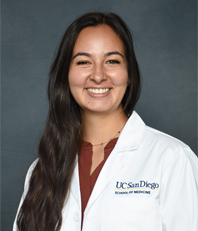
Hometown: Riverside, CA
Undergraduate School: San Francisco State University
"I chose PRIME-TIDE because I am passionate about working with and empowering underserved and underrepresented populations. My cultural background as a Cherokee and Japanese American student motivated me to become a doctor who will advocate for my community and diminish barriers associated with access to health care. During my path to medical school, I worked as a case manager for the unhoused population. This experience exposed me to the dire need for services and the impact a lack of health care has on an individual. As a PRIME-TIDE student, I am grateful to be a part of a community where I can continuously develop my ability to become a compassionate, inclusive, and patient-focused physician better equipped to serve our Native communities."
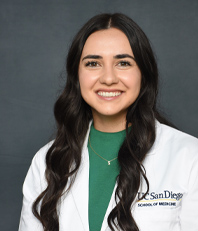
Hometown: Yorba Linda, CA
Undergraduate School: University of California, Los Angeles
"As a member of the Chickasaw Nation, I have always had a strong desire to connect to my heritage. During the height of the COVID-19 pandemic, I saw how disproportionately the virus affected Native communities while working at the United American Indian Involvement Community Health Clinic in downtown Los Angeles. It was then that my longing to connect with my culture developed into a commitment to serve my Native community in the most impactful way possible: by providing equitable care to underserved indigenous populations as a future physician. Thus, I am honored and excited to be a part of PRIME-TIDE at UC San Diego School of Medicine. I believe this program will allow me to develop into the culturally sensitive, compassionate physician I aspire to become."
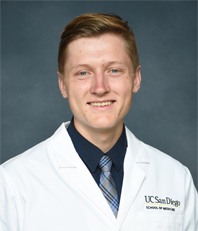
Hometown: Sacramento, CA
Undergraduate School: University of Colorado - Denver
"I am excited to be part of the PRIME-TIDE program with its mission to train clinically competent, culturally sensitive physicians interested in serving Native populations. A family friend who graduated from UC San Diego School of Medicine nearly 40 years ago and travels to Alaska every month to provide care at an Indian Health Services clinic sparked my interest in working in Native health. After graduating from the University of Colorado, I had the opportunity to pursue clinical research at the University of New Mexico (UNM), where the trials included many Native families. The experience provided a first-hand glimpse into the bio-psycho-social challenges that urban Natives and those on Native lands encounter. At UNM, I also had the opportunity to witness culturally sensitive care where, at times, university physicians and traditional healers were present for the patient and their families. Bringing quality and culturally appropriate care to this underserved community is rewarding. Through the program’s mentorship, I hope to increase my cultural competence, and I look forward to gaining clinical experience at IHS hospitals and clinics. The Native population has been historically undercounted in the census, underserved by the medical community, and overlooked in medical research. Through the PRIME TIDE program, I hope to become a skilled physician who can help address the disparities in research and care for this distinctive and underserved population."
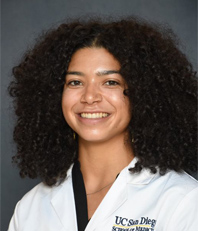
Hometown: Portland, OR
Undergraduate School: University of San Diego
"My decision to pursue medicine is driven by my commitment to serve communities that have historically had resources divested from them. Throughout my undergraduate years in San Diego, I spent much of my time working with local communities in their elementary schools and in a community garden. Located in a food desert, the community garden clearly highlighted inequities in the choices available to communities and the impact of this on their health and wellbeing. In PRIME-TIDE I am grateful to be in an environment where I am encouraged to pursue my passions and re-define how we understand and practice health care, particularly as it relates to the needs of our Native American communities. I know that this is just the beginning to a lifelong career in learning how to uplift and advocate for my patients."